
Age and enrollment
Check eligibility for new enrollment and what happens as the dog ages under uninterrupted cover.
Dog health insurance is a way to share eligible veterinary costs. Understanding the journey from a visit to a claim makes the policy easier to use.

Unlike assuming a human-style health plan will settle the whole bill at the clinic, plan for the actual payment arrangement. Many pet policies reimburse you after you pay and submit a claim.
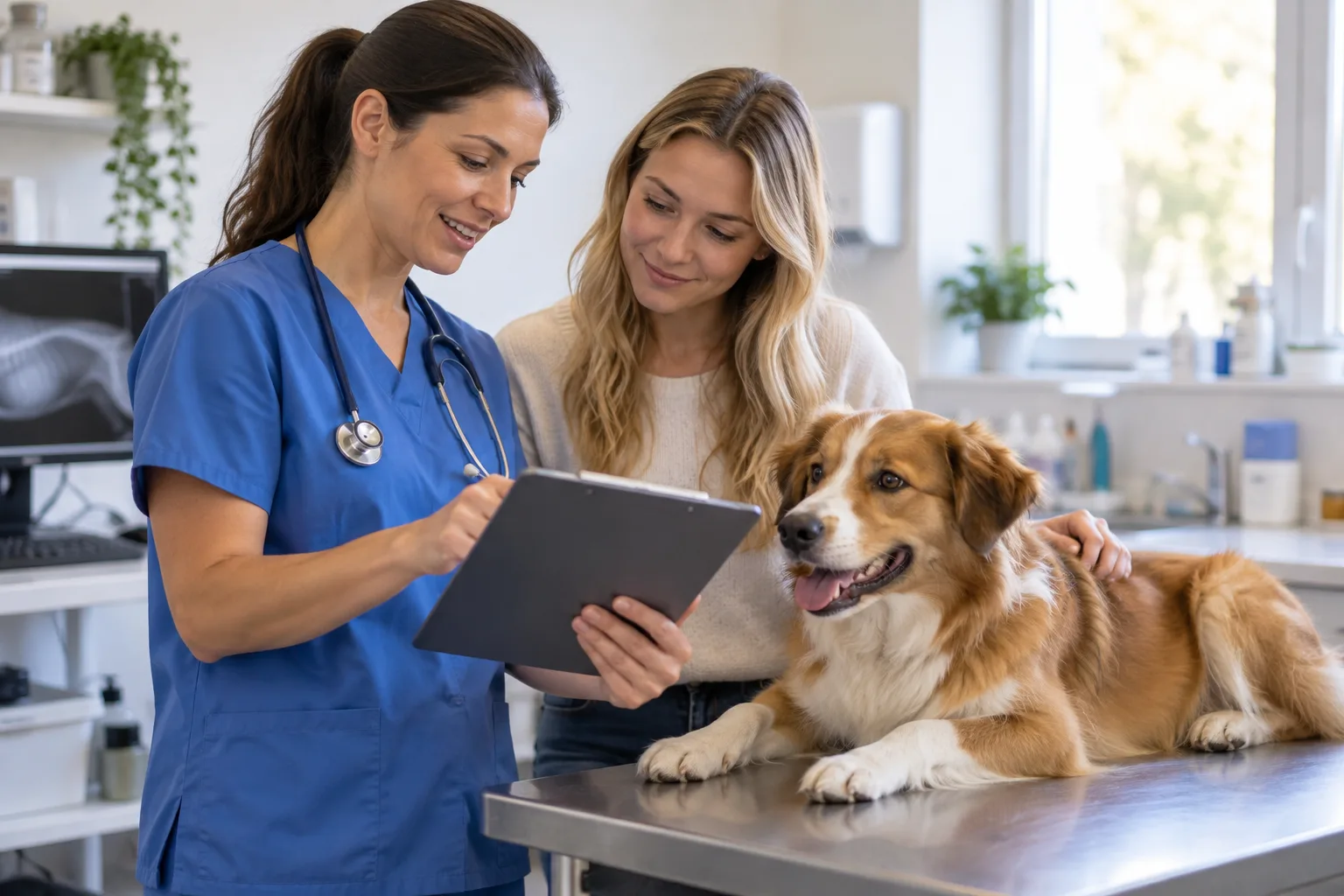
Suppose your dog needs an unexpected veterinary visit. The veterinarian recommends the care; the clinic tells you its payment requirements. The insurer separately decides which charges qualify under the contract. Those are three different decisions, and approval by one party does not replace an answer from the others.
Ask the clinic for an itemized estimate when practical. If it lists an examination, tests, treatment and medication, do not assume one coverage decision applies to every line. An examination-fee benefit or prescription provision may be separate from the treatment benefit.
For urgent care, contact the veterinary team promptly. Do not wait to shop for a new policy in the hope that it will pay for symptoms already present. Insurance planning is most useful before a medical problem appears.
Use this sequence to identify where an unexpected balance came from.
Was this accident or illness included? Check the diagnosis and policy scope before doing any arithmetic.
Compare earlier signs, the effective date and waiting provisions. A newly named diagnosis may still relate to earlier symptoms.
Separate covered treatment from charges outside the policy. Keep the invoice and clinical record together.
Apply the stated reimbursement basis, cost-sharing order, deductible and available benefit limit.
Compare the insurer’s explanation with the invoice. Ask about a specific disputed line or clause rather than only the total.
These categories address different risks. A wellness package alone is not a substitute for accident-and-illness protection.
| Category | Purpose | Question for a dog owner |
|---|---|---|
| Accident-only | Specified accidental injuries | Would you be prepared to pay for illness separately? |
| Accident and illness | Eligible new injuries and diseases | Which hereditary, chronic, orthopedic or dental issues are included or limited? |
| Routine or wellness benefit | Listed planned services | Will you use enough eligible services to justify its additional cost? |
| Direct payment, when available | A payment arrangement rather than a new medical benefit | Does your actual clinic support it, and what do you still pay at the visit? |
The same category can fit dogs differently. Record the details that affect the actual offer instead of relying on a generic dog price.
Check eligibility for new enrollment and what happens as the dog ages under uninterrupted cover.
Answer accurately. Ask about relevant hereditary and orthopedic wording without assuming a breed guarantees illness.
Disclose special activities if asked. Check racing, working or other activity exclusions where relevant.
Gather records from adoption, earlier clinics and current treatment. A change of owner does not automatically reset medical history.
Keep four amounts distinct: the recurring premium, your deductible, the portion of eligible costs you share, and expenses the contract excludes. If the insurer limits total benefits, costs beyond that limit can also remain yours. A low deductible alone does not make the policy pay the entire bill.
In an illustrative, unbranded contract that subtracts a $200 deductible before paying 80% of a $1,200 fully eligible bill, reimbursement would be $800 and the owner’s claim share would be $400. Premiums are additional. Other contracts apply the percentage before the deductible, so this example is not a quotation or a prediction for a named insurer.
You may need access to the full clinic payment before reimbursement arrives. Ask about this before an emergency. A direct-payment arrangement must be confirmed with both parties; it should never be inferred from the existence of insurance.
A free quote only means you can view a proposed price without buying. If you are offered a temporary promotional policy, employer contribution or adoption benefit, read who pays the premium, when it ends and what happens next. Do not assume a short offer pays for existing problems or all future visits.
Assistance from a charity or a clinic, a discount membership and an insurance policy are different arrangements. Ask what financial promise is being made and what eligibility rules apply. Avoid treating an application for help as guaranteed payment.
Once you choose a policy, store the declarations, full wording and selected endorsements. Recheck them at renewal and after an approved change. When your dog needs care, that small document file is more useful than a remembered advertising slogan.
Buying questions about coverage, veterinarians and payment.
Read the source → NAIC pet insurance overviewCoverage categories, pricing factors and reimbursement methods.
Read the source → California insurance regulator: questions to askQuestions about exclusions, limits and the basis of reimbursement.
Read the source →Regulator guidance supports the buying framework. Any named product example was checked against current official insurer materials; your state-specific policy and selected benefits determine the actual offer. No personalized premium was collected for this guide.
Check current options for your pet and location, then compare the policy details, exclusions, costs, and eligibility before choosing.